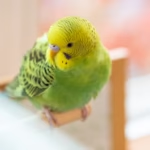
At first, treating a pet like a human often feels like the most loving thing you can do. Many owners speak to their animals as if they fully understand human intention, assign emotional motives to every action, and respond to behavior through a human lens of right, wrong, guilt, and affection. On the surface, this seems caring. It feels natural to project our own emotional framework onto an animal we deeply love. The problem is that affection and interpretation are not the same thing, and when human logic replaces species-specific understanding, behavior problems often begin to grow in ways that are difficult to notice at first.
What many people do not realize is that animals do not process the world through the same emotional and cognitive structures that humans do. A dog does not necessarily feel “guilty” in the way a person does. A rabbit is not being “dramatic.” A bird is not “holding a grudge” in the human sense. When owners interpret every action as if it came from a human mindset, they often end up responding incorrectly to what the animal is actually communicating. This is where frustration, confusion, and repeated behavior issues quietly begin.
The intention may come from love, but the interpretation often creates distance between what the animal needs and what the owner thinks it needs.

Why Human Emotion Often Hides the Real Cause
One of the biggest mistakes owners make is assigning human motives to instinctive behavior. A dog that chews furniture while left alone may quickly be labeled as spiteful, angry, or “acting out because it’s mad.” In reality, the behavior may be caused by separation stress, excess energy, boredom, or lack of environmental stimulation. The dog is not sitting there emotionally planning revenge. It is responding to an internal state using the tools available to it.
The same thing happens with other pets. A cat knocking objects off a table is often described as “being rude” or “wanting attention in a manipulative way,” when in reality it may be seeking stimulation, reacting to movement, or simply exploring cause and effect. Once human emotional labels are placed on instinctive actions, the real cause becomes harder to see. This is why treating pets like people often creates more confusion rather than more understanding.
Instead of asking what human emotion the pet is expressing, the better question is what biological need, instinct, or environmental trigger is driving the behavior.
Why Comfort Isn’t Always the Same as Care
Another major issue happens when owners assume that what feels comforting to a human must also feel comforting to an animal. For example, constantly holding a small prey animal because it seems “cute” and “needs affection” may actually increase stress if that species naturally prefers low-contact interaction. A reptile placed in a constantly warm room without a heat gradient may seem “comfortable” by human standards, while biologically it is missing the temperature choices it actually needs.
This happens because people often substitute emotional instinct for species-specific care. A bird covered in blankets and treated like a child at bedtime may actually need a stable dark cycle and environmental calm, not human-style nurturing rituals. The issue is not love itself. The issue is when love starts replacing understanding.
Good care is not always what feels emotionally right to the human.
Good care is what aligns with the animal’s biology.
Why Discipline Often Goes Wrong
Humanizing pets also creates problems in discipline and correction. Many owners believe their pet “knows what it did wrong” because it lowers its head, avoids eye contact, or looks submissive. This often leads to delayed correction based on the assumption that the animal understands moral cause and effect the way a human child would.
In reality, most animals respond to immediate association, not delayed moral interpretation. If a dog chewed something two hours earlier, reacting emotionally later rarely teaches the lesson the owner thinks it does. The dog is usually responding to your tone and body language in the present moment, not reflecting on a past decision with guilt.
This is one of the biggest ways human thinking quietly breaks training.
The owner thinks they are correcting meaning.
The animal is only reading immediate emotional energy.
The Hidden Damage to Routine and Boundaries
Another issue that develops over time is inconsistency. When pets are treated too much like people, owners often make decisions based on emotion rather than structure. Rules change depending on mood. One day the dog is allowed on the bed, the next day it is punished for the same behavior. Feeding times shift according to convenience rather than rhythm. Boundaries become emotional instead of predictable.
Animals thrive on consistency.
Routine helps create emotional stability, behavioral predictability, and trust. When human spontaneity replaces structured patterns, pets often begin displaying behaviors that owners later describe as “sudden problems.”
In reality, the problem was often the lack of clear and stable boundaries.
The Bigger Perspective Shift
The most important shift is understanding that respecting your pet does not mean turning it into a human. Real care comes from learning how that species thinks, reacts, and regulates itself. A dog needs canine structure, not human assumptions. A bird needs avian stimulation and boundaries, not emotional projection. A rabbit needs prey-animal safety, not mammalian affection patterns borrowed from human relationships.
Loving your pet deeply is not the issue.
Misreading its needs through a human lens is.
The strongest bond usually comes when affection is paired with species-specific understanding.

Conclusion
Treating your pet like a human often comes from love, but it can quietly create more problems than most owners realize. Human emotional labels, inconsistent boundaries, misplaced comfort, and incorrect discipline can all interfere with understanding what the animal is actually communicating. The goal is not to love less. The goal is to love more accurately.
Sometimes the best thing you can do for your pet is stop asking what a person would need in that situation and start asking what that animal needs instead. That is where real trust, better behavior, and healthier routines begin.

David Bencivenga
Writer, advertising copywriter and SEO analyst, I am originally from New York and have been passionate about reading and writing since I was little. Books have always been my companions and favorite pastime, which led me to my profession. I hope you enjoy each of my texts and that they can help you in some way. Happy reading!