
Introduction
Many hamster owners go through the same experience.
They try to pick up their pet…
and it immediately runs away, freezes, or reacts defensively.
At first, this feels confusing.
You’re not hurting it.
You’re trying to interact calmly.
So the question appears:
👉 “Why is it scared of me?”
But the hamster is not reacting to your intention.
👉 it is reacting to how the situation looks from above
And from its perspective, the interaction is very different from what you think.
Why This Matters
Hamsters are prey animals.
Their survival depends on detecting and avoiding threats quickly.
They don’t analyze situations the way humans do.
They respond to:
- movement
- direction
- speed
- positioning
And one of the strongest threat signals in nature is:
👉 something coming from above
The “From Above” Problem
In the wild, predators often attack from higher positions.
Birds, for example, strike from above with speed and precision.
Because of this, hamsters are highly sensitive to overhead movement.
So when your hand enters the cage from above…
👉 it matches a natural threat pattern
Even if you move slowly, the direction alone is enough to trigger caution.
Why Your Intention Doesn’t Matter
From your point of view:
👉 you are offering contact
From the hamster’s point of view:
👉 something large is descending toward it
It doesn’t evaluate your intention.
It reacts to the pattern.
A Practical Example
You reach into the cage.
Your hand moves downward.
The hamster:
- pauses
- lowers its body
- tries to move away
This is not random behavior.
It is a defensive sequence.
If the approach continues, the hamster may:
- flee
- freeze
- or bite
Not out of aggression.
👉 but out of protection
Why Repetition Can Make It Worse
If the hamster experiences this repeatedly without control, it may begin to associate:
👉 your hand = threat
Even if no harm occurs, the pattern becomes established.
This makes future interaction harder.
The Importance of Angle
Approach angle changes everything.
A hand coming from:
- above → threat signal
- side level → neutral signal
This small difference has a big impact.
Step-by-Step Interaction Adjustment
Step 1: Change Entry Direction
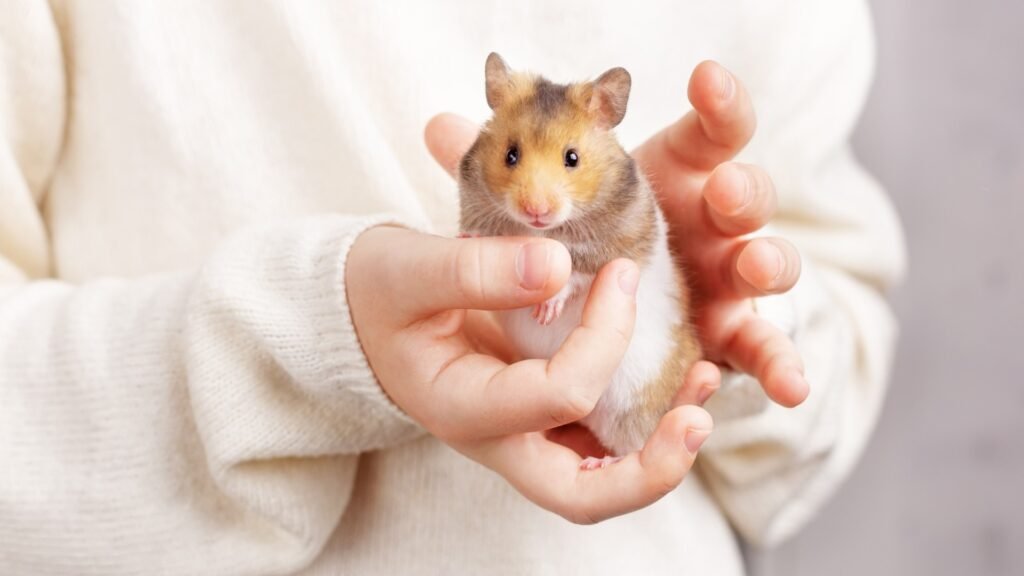
Instead of reaching from above, bring your hand in at the hamster’s level.
This reduces perceived danger.
Step 2: Stay Still First
Allow the hamster to approach you.
Movement creates pressure.
Stillness creates curiosity.
Step 3: Let It Initiate Contact
Do not grab immediately.
Let the hamster:
- sniff
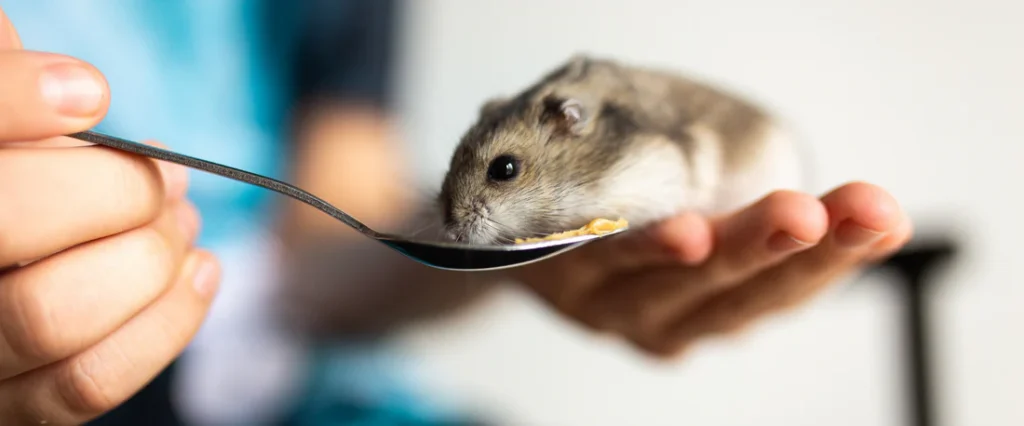
- step onto your hand
- explore
Step 4: Lift Gradually
Once contact is accepted, lift slowly.
Avoid sudden vertical movement.
Common Misinterpretations
“My hamster doesn’t like me”
It is reacting to perceived threat, not preference.
“It’s aggressive”
Defensive reactions are not aggression.
“It will never get used to me”
With correct approach, adaptation is possible.
Special Cases
New or recently relocated hamsters are more sensitive.
They may require:
- more time
- slower interaction
- minimal handling initially
The Bigger Shift
Interaction is not just about contact.
It is about:
👉 how the contact is introduced
Small changes in approach can completely alter the response.
The Perspective Change
Instead of asking:
👉 “Why is my hamster scared of me?”
Ask:
👉 “How does my movement look from its point of view?”
Because perception defines reaction.
Conclusion
Your hamster is not afraid of you as a person.
It is responding to a movement pattern that signals danger.
Once that pattern changes:
- fear decreases
- curiosity increases
- interaction becomes natural
Not because the hamster learned something new.
👉 but because the situation stopped feeling threatening
And when the threat disappears…
👉 trust has space to grow.