Introduction
Few behaviors look as iconic as this.
You approach your hedgehog…
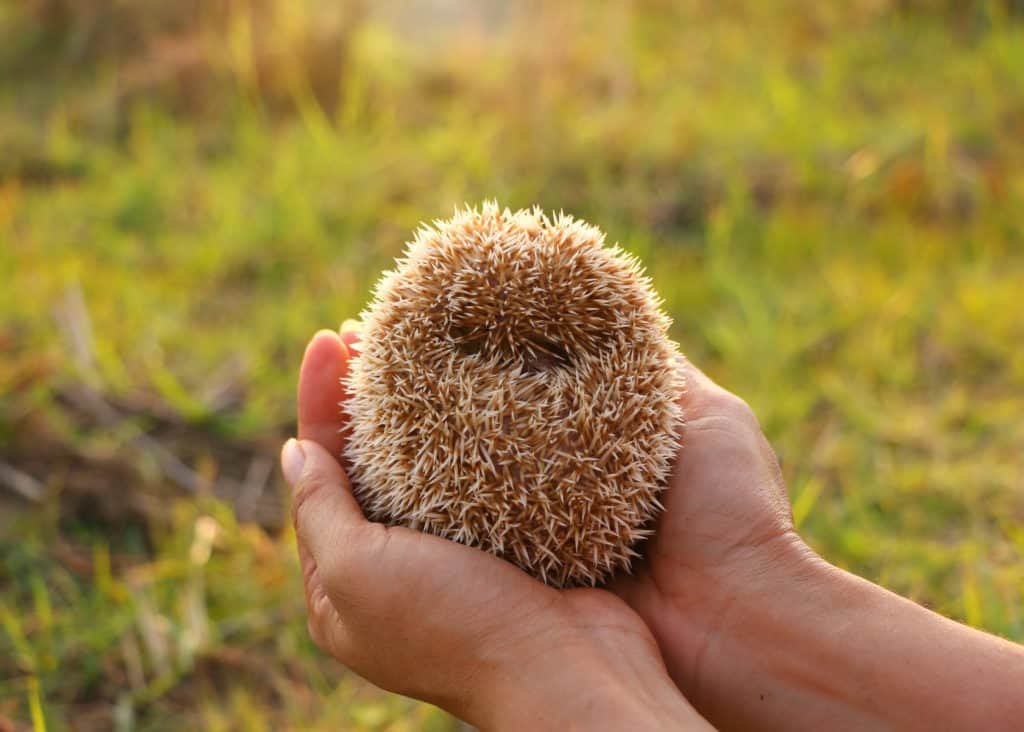
and instantly, it curls into a tight ball.
Spines out.
Face hidden.
Completely closed off.
To many owners, this moment feels harmless.
Even cute.
Some interpret it as:
- shyness
- calmness
- a normal reaction that will pass quickly
But this interpretation misses something important.
Because when a hedgehog curls into a ball…
👉 it is not relaxing
👉 it is actively defending itself
Why This Matters
Understanding this behavior changes how you interact with your pet.
If you assume the animal is calm, you might:
- continue touching it
- try to open it up
- insist on handling
But from the hedgehog’s perspective:
👉 the threat is still present
And the defensive response remains active.
The Defense Mechanism Explained
Hedgehogs rely on a very specific strategy.
They don’t run fast.
They don’t attack directly.
Instead, they:
👉 become unreachable
By curling into a ball, they:
- protect vulnerable areas
- expose only spines
- eliminate access points
This is a complete shutdown of interaction.
Why It Happens So Fast
The response is immediate.
There is no hesitation.
That’s because this behavior is:
👉 instinctive
It doesn’t require thinking.
The moment something feels uncertain, the body reacts.
A Practical Example
You pick up your hedgehog.
Within seconds, it curls up.
From your perspective:
👉 expected reaction
But if you continue holding it without change…
the animal remains closed.
Not because it is comfortable.
👉 but because the condition hasn’t changed
The Mistake Most Owners Make
Trying to “wait it out” without adjusting anything.
Or worse:
trying to force it to open.
This creates a loop:
- the animal stays defensive
- the owner maintains pressure
- trust does not develop
The Role of Familiarity
A hedgehog doesn’t relax because time passes.
It relaxes when:
👉 the situation feels predictable
This includes:
- consistent handling
- stable movement
- low pressure
Without that, the defensive response repeats.
How Relaxation Actually Happens
When a hedgehog feels safe, it doesn’t “uncurl suddenly.”
It gradually:
- loosens tension
- reveals small movements
- begins to explore
These are voluntary actions.
Not forced ones.
Step-by-Step Interaction Adjustment
Step 1: Reduce Immediate Pressure
After picking it up, remain still.
Let the animal process the situation.
Step 2: Avoid Forcing Movement
Do not try to open the hedgehog manually.
That increases resistance.
Step 3: Keep Handling Consistent
Use the same approach each time.
Predictability builds familiarity.
Step 4: Allow Exploration
Once it begins to move, let it explore freely.
Common Misinterpretations
“It’s just shy”
It is actively defending itself.
“It will get used to it if I insist”
Pressure slows adaptation.
“It likes being held like that”
Stillness does not equal comfort.
Special Cases
New hedgehogs or those with limited interaction history may:
- stay curled longer
- react faster
- require more gradual exposure
The Bigger Shift
This behavior is not a phase.
It is a response to conditions.
To change it, you don’t force the animal.
👉 you change the conditions
The Perspective Change
Instead of asking:
👉 “How do I make it open?”
Ask:
👉 “What needs to change so it feels safe enough to open?”
Because safety comes before interaction.
Conclusion
When your hedgehog curls into a ball, it is not being passive.
It is using its most effective defense.
Recognizing this changes everything.
Once the environment becomes:
- predictable
- low-pressure
- consistent
The defensive response becomes less frequent.
Not because the animal stopped protecting itself.
👉 but because it no longer needed to
And when that happens…
👉 interaction becomes natural, not forced.