Introduction
Many reptile owners believe that keeping the enclosure “warm” is enough.
They check the temperature.
Adjust the heating.
Ensure the average feels correct.
From a human perspective, this makes sense.
If the space is warm, the animal should be comfortable.
But reptiles don’t experience temperature as a uniform condition.
👉 they depend on gradients, not averages
And without a proper heat spot — a specific, concentrated source of warmth — the entire system becomes inefficient.
Why This Matters
Reptiles cannot regulate body temperature internally like mammals.
They rely on external heat to:
- activate digestion
- control movement
- support immune function
But they don’t just need heat.
👉 they need the ability to choose heat
That choice is what allows proper regulation.
The Problem With Even Heating
When the entire enclosure is evenly warm, something important is lost:
👉 variation
Without variation, the reptile cannot:
- warm up efficiently
- cool down when needed
- adjust its internal state
It becomes stuck in a middle zone.
Not cold enough to rest properly.
Not warm enough to function optimally.
What a Heat Spot Actually Does
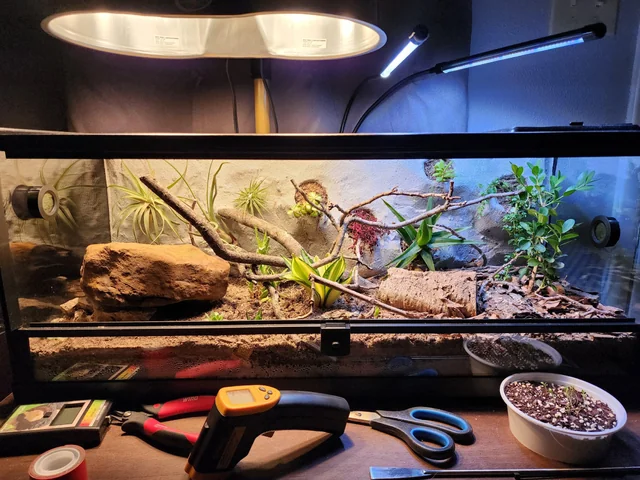
A heat spot creates a localized area of higher temperature.
This allows the reptile to:
- position itself directly under heat
- absorb energy efficiently
- raise body temperature quickly
After that, it can move away and regulate.
This movement between zones is essential.
A Practical Example
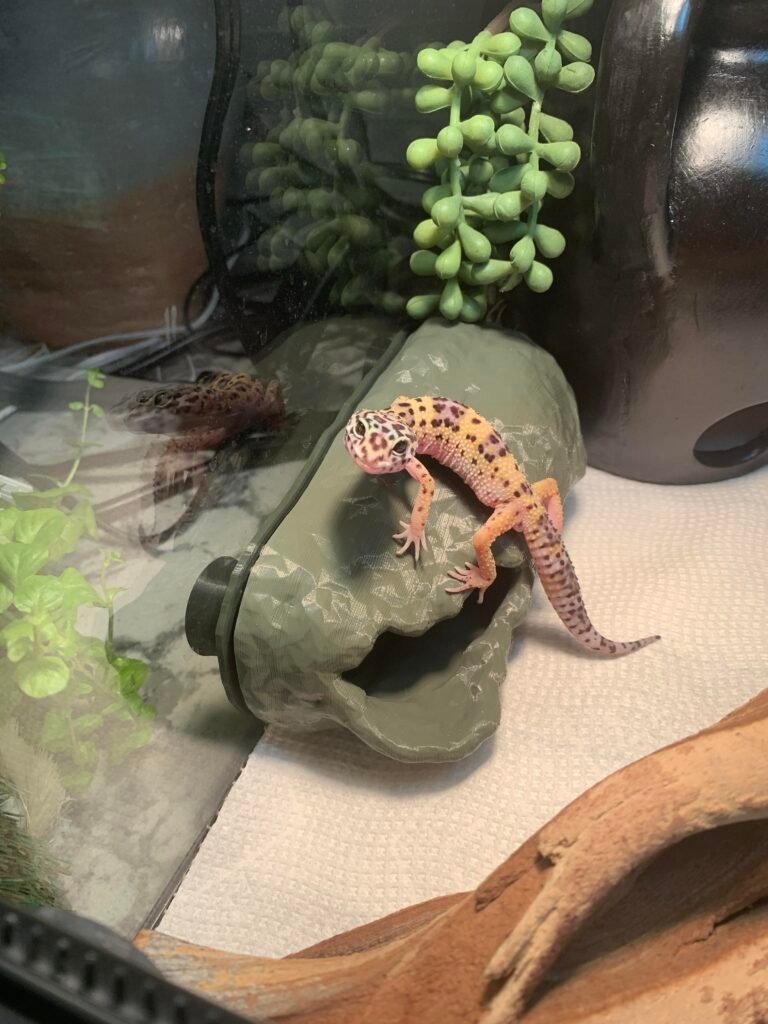
A lizard sits directly under a heat lamp.
It remains there for a period.
Then moves to a cooler area.
From the outside, this looks like simple movement.
But internally, the animal is:
- increasing metabolic activity
- optimizing digestion
- regulating internal processes
Without that heat source, this cycle cannot happen correctly.
Why Average Temperature Is Misleading
Measuring the overall temperature of the enclosure can give a false sense of security.
The average may seem correct.
But without a hotter zone:
👉 the reptile never reaches optimal activation
It remains in a low-efficiency state.
The Role of Positioning
Not all heat sources are equal.
Placement matters.
The heat spot should be:
- clearly defined
- accessible
- stable in intensity
This allows the reptile to use it consistently.
Step-by-Step Thermal Setup
Step 1: Create a Temperature Gradient
Ensure one side is warmer and the other is cooler.
This gives the reptile options.
Step 2: Establish a Basking Zone
Use a focused heat source to create a distinct hot spot.
Step 3: Monitor Surface Temperature
Air temperature is not enough.
Surface heat is what the reptile absorbs.
Step 4: Allow Free Movement
Do not restrict access between zones.
Movement is part of regulation.
Common Misinterpretations
“The tank is warm enough”
Warmth alone does not replace a heat gradient.
“My reptile doesn’t use the heat spot”
It may be incorrectly placed or not intense enough.
“It stays in one place too long”
That may indicate imbalance in temperature distribution.
Special Cases
Different species require different temperature ranges.
Understanding the specific needs of your reptile is essential.
The Bigger Shift
Reptile care is not about maintaining a single condition.
It is about creating a system where the animal can:
👉 regulate itself
The Perspective Change
Instead of asking:
👉 “Is the enclosure warm enough?”
Ask:
👉 “Can my reptile choose the temperature it needs?”
Because choice is what enables proper function.
Conclusion
Your reptile does not need a uniformly warm space.
It needs a structured thermal environment.
A place to heat up.
A place to cool down.
When this system exists:
- behavior stabilizes
- digestion improves
- overall health increases
Not because you added more heat.
👉 but because you added the right kind of heat
And when the system allows regulation…
👉 the animal takes care of the rest.