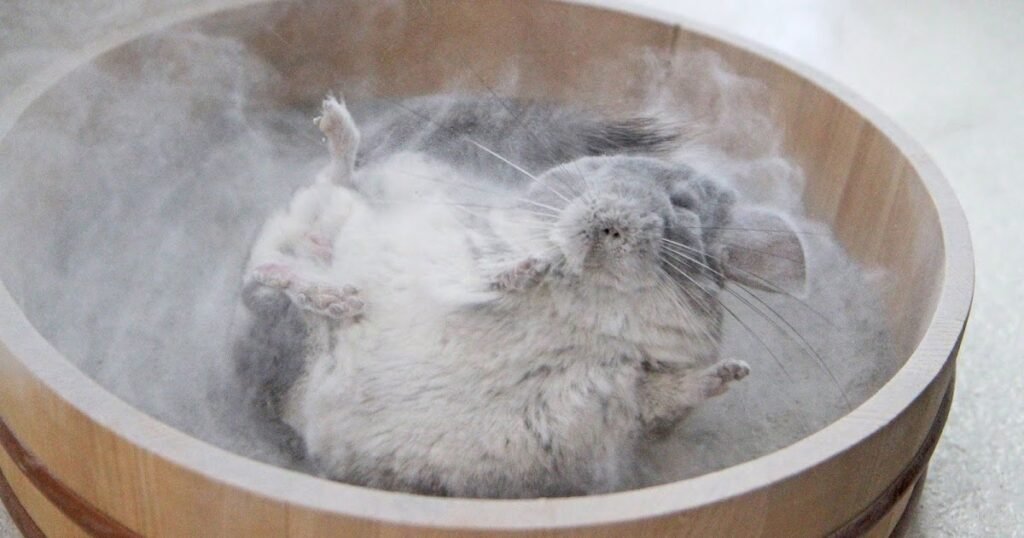
Many first-time chinchilla owners are surprised when they learn that these soft, fluffy animals should not be bathed with water the way many other pets are. At first, this sounds strange. After all, when people think about keeping an animal clean, the most obvious instinct is to imagine water, soap, rinsing, and drying. That is the standard model most people know. If a pet gets dirty, you wash it. If its fur looks dusty, you clean it. If you want it to smell better, you assume water is part of the solution. But with chinchillas, that instinct can create a serious problem.
The truth is that chinchillas do not stay healthy by getting wet. They stay healthy by staying dry. Their grooming needs are very different from those of dogs, cats, or even rabbits, and once you understand how their fur works, the reason becomes much clearer. What looks like an unusual care routine is actually one of the most important parts of keeping a chinchilla comfortable, clean, and protected from skin and coat problems. Dust baths are not an optional extra. They are a biological need. And water, despite seeming harmless, can make things much worse.
This difference begins with the nature of the chinchilla itself. Chinchillas evolved in dry, mountainous environments where their bodies adapted to conditions very different from the humid, water-based routines that humans associate with cleanliness. Their coat is one of the densest in the animal world, and that density changes everything. Unlike animals whose fur can dry relatively quickly after getting wet, a chinchilla’s fur traps moisture very easily and can hold it close to the skin for far too long. That trapped moisture creates the exact conditions that chinchillas are built to avoid. Instead of helping them, water can leave the skin vulnerable, make the coat unhealthy, and increase the risk of fungal irritation or other skin-related issues.
This is why dust baths matter so much. They are not simply about appearance. They help remove excess oils, lift dirt, keep the coat light and clean, and support the natural condition of the fur without introducing the dangers that come from moisture. To someone unfamiliar with chinchilla care, the idea of an animal rolling in dust to get clean may seem backward. But in reality, it is one of the clearest examples of how human assumptions about pet care do not always match the biological needs of the animal itself.
Once owners understand this shift, the entire topic starts to make more sense. The goal is not to clean a chinchilla the way a person would clean a dog. The goal is to support the type of coat and skin balance the chinchilla is naturally designed for. That is why dust is helpful and water is risky. What looks like a contradiction is actually the correct form of care.
Why Dust Baths Matter More Than Most Owners Realize
A dust bath is one of the most essential parts of chinchilla care because it supports both the health of the coat and the comfort of the animal. Chinchillas produce natural oils on their skin just like many other mammals, but because of the structure and density of their fur, those oils need to be managed in a very specific way. If too much oil builds up, the fur can begin to feel heavy, clumped, or less effective at insulating and protecting the body. If dirt remains trapped in the coat, the animal can become uncomfortable, and over time the condition of the fur may decline. Dust helps solve that problem in a way that water cannot.
When a chinchilla rolls in the proper dust, the fine particles move through the coat and absorb excess oil while loosening debris. This leaves the fur cleaner, lighter, and closer to the condition it is meant to have. The process also matches the animal’s instincts. Dust bathing is not something chinchillas need to be forced into understanding. It is a natural behavior. Many chinchillas become visibly excited when their dust bath is offered because the activity itself is part of how they regulate comfort and maintain their coat. It is both practical and instinctive.
There is also an emotional side to this routine that owners often overlook. A healthy dust bath is not only about grooming. It often becomes part of the chinchilla’s sense of normalcy. Repeated routines create comfort in many small animals, and chinchillas tend to thrive when their environment is predictable and appropriate to their species. Offering dust baths regularly helps maintain that rhythm. In other words, this is not simply about whether the fur looks good. It is about whether the animal is being cared for in a way that matches its biological and behavioral needs.
Another important detail is that dust baths help preserve the texture that makes chinchilla fur so unique. Healthy chinchilla fur should feel extremely soft, airy, and dense, not greasy, damp, or compacted. Once the coat starts to lose that quality, it often means something about the environment or care routine needs attention. Dust baths support the coat before it reaches that point. They are preventive as much as they are corrective.
This is why owners should never think of the dust bath as a novelty. It is not there for entertainment, even if the chinchilla clearly enjoys it. It is part of the animal’s maintenance. A chinchilla without appropriate dust baths is not simply missing a fun activity. It is missing a core part of healthy grooming.
Why Water Creates Problems Instead of Solving Them
The biggest misunderstanding in chinchilla care is the assumption that water must be cleaner than dust. From a human perspective, that feels obvious. Water rinses things away. Dust seems messy. But chinchilla fur changes the equation completely. The issue is not what seems cleaner to us. The issue is what the chinchilla’s body can safely handle.
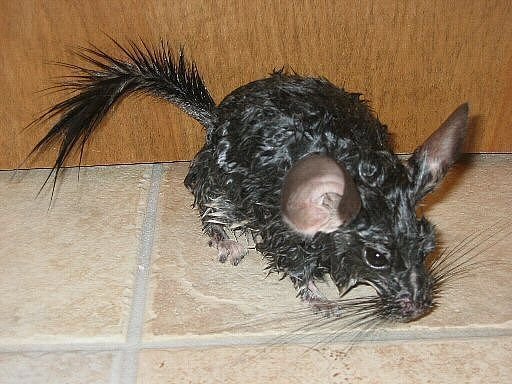
A chinchilla’s coat is so dense that when water gets into it, drying becomes difficult. Moisture can remain trapped close to the skin much longer than owners expect, especially if the room is cool or humid. That lingering dampness can create conditions in which the coat no longer functions properly and the skin becomes vulnerable. Instead of feeling light and soft, the fur may become matted, clumpy, or uneven. The animal may also become chilled more easily because the coat is no longer in its ideal state.
This is where water stops being a harmless mistake and starts becoming a risk. A wet chinchilla is not just an inconvenience that can be dried with a towel like a dog. Towels and hair dryers do not reliably solve the deeper issue because the problem is how deeply the moisture can settle within the coat. Even if the outside feels drier after some effort, the layers beneath may still hold dampness. That is exactly what owners want to avoid.
Water can also increase stress. Chinchillas are sensitive animals, and many do not tolerate being wet or handled in a water-bath context the way some other pets might. The process itself may be frightening and uncomfortable. So even before you consider the impact on the coat, water baths can already create unnecessary distress. When you combine stress with the physical risks of trapped moisture, it becomes clear that water is not a substitute for proper grooming. It is the wrong tool for the job.
This is an important mindset shift because it forces owners to stop treating all pet hygiene as interchangeable. Cleanliness is not one-size-fits-all. A chinchilla does not need to be washed according to human instincts. It needs to be maintained according to chinchilla biology. Once that becomes the standard, dust baths stop seeming unusual and water stops seeming helpful.
The Hidden Problem: Human Logic Versus Animal Logic
A lot of mistakes in pet care happen when people assume that what makes sense for humans must also make sense for animals. This is especially common with hygiene. People are raised to believe that water equals clean, and anything dry or dusty feels like the opposite. So when they see a pet rolling around in dust, the instinctive reaction is often confusion. Some may even worry that the animal is getting dirtier instead of cleaner. But this is one of those areas where human logic and animal logic move in completely different directions.
Chinchillas are not trying to become clean according to human standards. They are regulating their coat in the way their species evolved to do. Their bodies are adapted to dry grooming, not wet washing. The behavior makes sense when viewed through the right lens, but it looks strange if judged by the wrong one. This is why some well-meaning owners accidentally make harmful choices. They are not trying to neglect the animal. They are trying to care for it using the wrong framework.
Understanding this difference changes the way owners approach not only dust baths, but chinchilla care as a whole. It encourages a better question. Instead of asking, “What would keep this animal clean in the way I understand cleanliness?” the better question is, “What kind of care is this species naturally built for?” That shift leads to better decisions across the board, from bathing and cage setup to temperature control and handling.
In many ways, the dust bath is a perfect example of species-specific care. It reminds owners that caring well for an animal often means letting go of human assumptions. Good care does not always look familiar. Sometimes it looks strange at first because it follows the design of the animal rather than the habits of the person.
What a Proper Dust Bath Routine Should Support
A healthy dust bath routine should do more than simply give the chinchilla occasional access to dust. It should support the coat without creating excess mess, skin irritation, or overuse. The right rhythm matters because too little access can leave the coat oily or poorly maintained, while too much exposure in some situations may dry the skin unnecessarily or lead to waste. The goal is balance.
The dust itself also matters. Not all dust is appropriate. Chinchillas need dust made for chinchilla bathing, not random household powder, sand, dirt, or other materials that may be too coarse or unsafe. Proper chinchilla bathing dust is fine enough to move through the coat correctly and absorb oil without damaging the fur or irritating the skin. Owners who improvise with unsuitable materials may unintentionally create more problems than they solve.
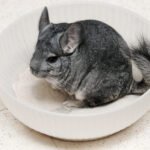
The bathing area should also feel safe and manageable. A stable container or bath house helps keep the dust somewhat contained while giving the chinchilla enough space to roll, flip, and move naturally. Because the activity is instinctive, most chinchillas will show you exactly how much they enjoy it once the setup is correct. Their movements often become energetic and enthusiastic, which is why this routine also gives owners a clear window into normal species behavior. A chinchilla that happily uses its dust bath is often expressing both comfort and instinct.
Routine matters because regularity helps preserve coat quality over time. The exact frequency can vary depending on the individual animal, climate, and environment, but the broader principle stays the same: dust bathing should be frequent enough to maintain the coat without turning into a neglected afterthought. Owners who treat it as a core routine rather than an occasional extra tend to support better long-term coat health.
Signs the Coat Is Not Being Supported Properly
One useful way to understand the value of dust baths is to notice what happens when coat care is not properly supported. A chinchilla’s fur is often one of the clearest indicators of whether the grooming routine and environment are appropriate. When things are going well, the coat tends to look full, soft, light, and even. When things are off, changes often begin to appear gradually.
The fur may start to look less airy or more separated. It may feel heavier than it should. Some owners notice clumping, dullness, or a texture that no longer feels as soft and clean as healthy chinchilla fur normally does. In some cases, skin irritation may begin to develop beneath the surface, especially if moisture has become a factor or the coat has not been maintained correctly. Even behavioral shifts can matter. A chinchilla that seems uncomfortable, more irritated than usual, or less settled after handling may be signaling that something in its care routine is off.
This does not mean every coat change points to the same cause, but it does mean the coat should be taken seriously as feedback. Chinchillas often show owners how they are doing through small physical changes long before a problem becomes obvious. Dust baths are part of preventing those issues, which is why they matter even when everything appears normal. Good routines protect health quietly in the background.
Why This Topic Matters So Much for New Owners
This issue is especially important for new chinchilla owners because water-based bathing feels so intuitive at first. People coming from dog or cat care often assume they are being extra responsible by trying to wash an animal that seems dusty, dirty, or in need of a cleanup. But with chinchillas, a well-meaning action can easily become the wrong one. The danger here is not neglect. It is misplaced care.
That is why education matters so much. A person who understands why dust baths exist is far less likely to panic and reach for water when the chinchilla’s fur does not look perfect to the human eye. They are more likely to pause, assess the coat properly, and use the right species-specific solution. In this sense, knowledge protects the animal. It prevents owners from solving the wrong problem in the wrong way.
It also helps owners feel more confident. Chinchillas can seem delicate at first, and many people worry about doing something wrong. Understanding the logic behind dust bathing reduces that uncertainty. Instead of feeling confused by an unusual routine, the owner begins to see the deeper pattern. Dry care supports dry-adapted animals. Water disrupts what the coat is designed to do. Once that principle becomes clear, many other care choices become easier too.
Conclusion
Your chinchilla needs dust baths because its body is designed for dry grooming, not water-based cleaning. What may seem unusual from a human perspective is actually one of the most natural and necessary parts of chinchilla care. Dust helps absorb excess oil, remove debris, preserve the texture of the coat, and support the overall health and comfort of the animal in a way that matches its biology.
Water, on the other hand, often creates the exact conditions chinchillas are not built to handle. Because their fur is so dense, moisture can become trapped close to the skin, making drying difficult and increasing the risk of coat and skin problems. What seems cleaner to a person can become harmful to the animal.
The bigger lesson is simple. Good care does not come from treating every pet the same. It comes from understanding what that specific animal is built for. In the case of a chinchilla, cleanliness does not come from getting wet. It comes from staying properly dry. And once you understand that, dust baths stop looking strange and start looking exactly like what they are: essential.

David Bencivenga
Writer, advertising copywriter and SEO analyst, I am originally from New York and have been passionate about reading and writing since I was little. Books have always been my companions and favorite pastime, which led me to my profession. I hope you enjoy each of my texts and that they can help you in some way. Happy reading!