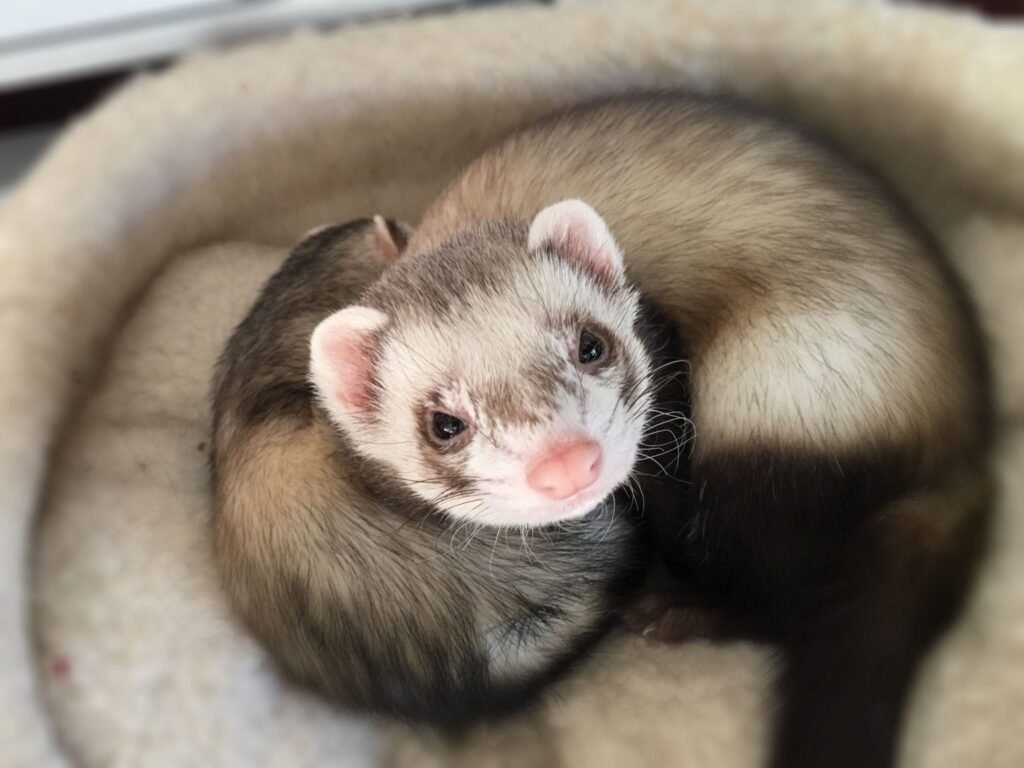
Many first-time ferret owners feel a wave of concern the first time their ferret bites during play. The immediate reaction is usually emotional and very understandable. Most people quickly assume that the animal is becoming aggressive, difficult, or badly behaved. Because biting is often associated with anger or hostility in the way humans interpret behavior, it is easy to believe that something is wrong. However, with ferrets, that first impression is often misleading.
The truth is that biting during play is one of the most misunderstood behaviors in ferret care. In many cases, the ferret is not showing aggression at all. Instead, it is engaging in one of the most natural forms of interaction for its species. Ferrets are highly energetic, curious, and physically expressive animals. They use their mouths not only to eat, but also to explore, communicate, and interact with the world around them. This includes toys, objects, other ferrets, and very often their owners.
What feels alarming to a person is often completely normal from the ferret’s point of view.
During moments of excitement, a ferret may nip, mouth, or lightly bite as part of play. This is especially common in younger ferrets that are still learning boundaries and bite control. Much like puppies, they do not always understand how much pressure is too much. What feels painful to a human hand may not be intended as harm. In many situations, it is simply overexcited play.
This is why context matters so much.
A playful bite is very different from a defensive bite.
When a ferret is playing, the biting is often accompanied by fast movement, jumping, sideways bouncing, chasing behavior, and repeated attempts to keep the interaction going. The body language usually feels loose and energetic rather than tense. By contrast, a fearful or defensive bite tends to happen with a more rigid posture, sudden reaction, and a clearly protective tone.
One of the biggest mistakes owners make is reacting in a way that accidentally reinforces the behavior. The most common example is pulling the hand away quickly. From a human perspective, this feels automatic. If something bites, you move away. But from the ferret’s perspective, that sudden movement can make the game even more exciting. The fast motion can trigger chase instincts and make the ferret feel like the play session just became more stimulating.
In other words, the bite gets rewarded.
The ferret bites, your hand moves fast, and now the interaction feels even more fun.
Over time, this can teach the ferret that biting creates an exciting reaction.
Another mistake is responding with exaggerated emotion. Yelling, jerking your hands, or reacting dramatically can increase the animal’s excitement level. Ferrets are extremely responsive to movement and energy. A loud or sudden reaction may not be interpreted as a correction. Instead, it may simply raise the intensity of the play.
This is one of the hidden reasons the behavior sometimes gets worse instead of better.
Inconsistency can also make the problem stronger. Some owners allow gentle nipping during certain moments but react negatively when the bite becomes harder. From the ferret’s perspective, this creates unclear boundaries. The animal keeps testing pressure because the response it receives changes from one interaction to another.
Ferrets learn through repeated patterns.
If the pattern is inconsistent, the behavior often remains inconsistent too.
The key is to stop interpreting every bite as aggression and start seeing it as communication mixed with excitement. In many cases, your ferret is not trying to hurt you. It is simply engaging in play using the tools nature gave it.
Once you understand that, the goal shifts.
Instead of trying to “punish” the behavior emotionally, the focus becomes teaching better boundaries through calm and consistent responses.
This is what makes the biggest difference over time.
The behavior itself is usually not the problem.
The response to it often is.

David Bencivenga
Writer, advertising copywriter and SEO analyst, I am originally from New York and have been passionate about reading and writing since I was little. Books have always been my companions and favorite pastime, which led me to my profession. I hope you enjoy each of my texts and that they can help you in some way. Happy reading!
Related posts:
 Why Your Chinchilla Needs Dust Baths (And Why Water Makes Things Worse)
 It Never Happens “Out of Nowhere”: The Hidden Signals Behind Why Your Bird Bites
 Why Your Pet Is Not “Slow to Learn” — You’re Just Expecting Results in the Wrong Timeframe
 Why Your Cat Meows More at Night (And the Mistake That’s Quietly Making It Worse)