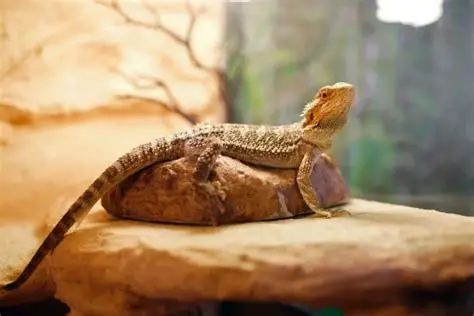
At first glance, many reptile owners assume that keeping the enclosure generally warm is enough. If the glass feels slightly warm when touched, the ambient temperature seems comfortable, and the reptile is not showing any obvious sign of distress, it becomes very easy to believe that the setup is correct. From a human point of view, this logic sounds completely reasonable. After all, if the entire tank feels warm, why would one specific hotter area make such a difference?
The problem is that reptiles do not experience heat the way humans do.
Unlike mammals, reptiles are ectothermic animals, which means they depend on external heat sources to regulate their internal body temperature. They do not naturally produce and maintain body heat in the same stable way that humans, dogs, or cats do. Because of this, the difference between a generally warm tank and a proper heat spot is far greater than most owners initially realize.
A reptile does not simply need warmth.
It needs control.
This is the most important perspective shift in understanding reptile care.
A generally warm enclosure may prevent the animal from becoming too cold, but that alone does not mean it can regulate its body properly. What truly matters is giving the reptile the ability to move between different temperatures based on what its body needs at a specific moment. This is why a heat spot is not just another optional feature in the setup. It is one of the most essential parts of the enclosure.
In nature, reptiles do this constantly. They move into direct sunlight, rest on rocks that have absorbed heat, stay under branches that hold warmth, and then retreat into cooler shaded areas when needed. This constant movement between temperature zones is how they control everything from digestion to energy levels.
When the entire tank is only mildly warm and uniform, that natural regulation process becomes limited.
The reptile loses choice.
And when it loses choice, it loses one of the most important tools for staying healthy.
Why General Warmth Is Often Misleading
One of the biggest mistakes owners make is focusing only on average tank temperature. Seeing a stable reading on a thermometer often creates a false sense of security. If the enclosure shows a temperature that seems acceptable overall, many assume that the thermal environment is complete.
But average warmth and functional warmth are not the same thing.
A reptile needs a thermal gradient.
This means the enclosure should have a clearly defined warm side, a cooler side, and a heat spot that acts as the highest temperature zone. Without this variation, the animal may never be able to reach the body temperature required for proper biological function.
This is especially important because reptiles do not use heat passively.
They actively seek it.
A basking reptile moving under a lamp or onto a heated surface is not simply resting. It is intentionally regulating its body. That behavior is part of how its body works.
Without a proper heat spot, the reptile may spend the entire day in a tank that feels warm to you but still does not allow it to fully activate normal internal processes.
This is where many long-term problems begin.
Why Digestion Depends on a Proper Heat Spot
One of the most critical reasons a heat spot matters is digestion.
After eating, many reptiles instinctively move directly toward the warmest part of the enclosure. This is not random behavior. It is a biological necessity. Their digestive system functions far more efficiently when body temperature reaches a certain range.
If the enclosure is only mildly warm without a dedicated basking zone, food may sit in the digestive tract longer than it should.
This can lead to slower digestion, reduced appetite, discomfort, and in more serious cases, regurgitation or impaction depending on the species and setup.
From the outside, an owner may notice that the reptile is eating less, moving less, or appearing lethargic.
The immediate assumption may be illness.
But in many cases, the hidden issue is thermal support.
The animal simply cannot get warm enough to digest properly.
This is why a heat spot is not just about comfort.
It is directly tied to metabolic function.
Without proper heat, even feeding routines can begin to fail.
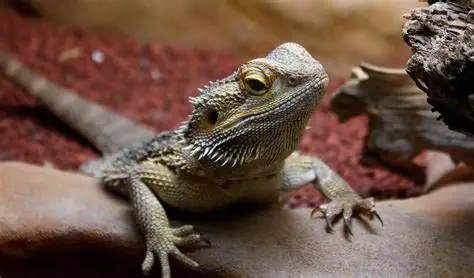
Why It Affects Energy, Movement, and Behavior
Another major reason this matters is because temperature directly influences energy levels.
A reptile that cannot reach its preferred body temperature often appears slower, less responsive, and less active. It may spend longer periods hiding, remain in one place for extended hours, or seem uninterested in exploring the enclosure.
Many owners mistake this for personality.
They assume the reptile is naturally calm, lazy, or simply low-energy.
Sometimes that is true.
But very often, low activity is actually the result of insufficient heat access.
The body is conserving energy because it does not have the temperature support needed for normal movement.
This affects everything.
Appetite.
Exploration.
Basking behavior.
Reaction speed.
Even immune system function.
The difference between a reptile with a proper heat spot and one in a uniformly warm tank can be dramatic.
Why Human Perception Creates Confusion
One of the most common reasons owners miss this issue is because human temperature perception is completely different.
What feels warm to your hand may still be far too cool for a reptile’s biological needs.
This is one of the most dangerous assumptions in reptile care.
Humans often judge enclosure heat emotionally.
“If it feels warm, it must be enough.”
But reptiles need temperature precision, not emotional comfort.
A tank that feels comfortable to you may still lack the intensity needed for basking.
This is why relying on touch instead of actual temperature readings often leads to poor setups.
The reptile experiences the environment through biological requirement, not human comfort.
The Bigger Perspective Shift
The biggest mindset shift is understanding that reptiles do not just need a warm enclosure.
They need temperature choice.
The heat spot exists so the animal can intentionally move toward higher heat when needed and retreat when it has reached the desired body temperature.
This mirrors natural behavior.
The enclosure should not feel equally warm everywhere.
It should allow active thermoregulation.
That is what keeps the reptile functioning properly.
Once you start seeing the enclosure as a system of temperature zones rather than one warm box, everything changes.
Conclusion
Your reptile does not just need a warm tank.
It needs a true heat spot.
More than a simple comfort feature, this hotter zone supports digestion, metabolism, energy, movement, immune health, and natural basking behavior.
The real goal is not to make the enclosure feel warm overall.
The goal is to recreate the ability to choose heat.
Because for reptiles, health often begins with access to the exact temperature their body needs at the exact moment it needs it.

David Bencivenga
Writer, advertising copywriter and SEO analyst, I am originally from New York and have been passionate about reading and writing since I was little. Books have always been my companions and favorite pastime, which led me to my profession. I hope you enjoy each of my texts and that they can help you in some way. Happy reading!