Many aquarium owners believe that the best way to keep a tank healthy is to replace all the water whenever it starts to look cloudy, develops an odor, or shows visible debris.
At first, this approach seems completely logical.
If the water looks dirty, replacing everything should immediately solve the problem.
For someone new to fishkeeping, a full water change often feels like the most responsible action.
Fresh water seems cleaner, safer, and better for the fish.
But this assumption can be misleading.
In reality, replacing all the water in your tank at once can do significantly more harm than good.
The danger is not always immediate, which is what makes this mistake so common.
Sometimes the fish may seem fine for a few hours.
Sometimes they even appear more active at first.
Then, within the next day or two, signs of stress begin to appear.
Rapid breathing.
Loss of appetite.
Erratic swimming.
Staying at the bottom of the tank.
In more severe cases, sudden deaths.
The reason is simple.
An aquarium is not just a container filled with water.
It is a living biological system.
The moment you understand this shift, tank care becomes much easier and far more effective.
Why This Matters
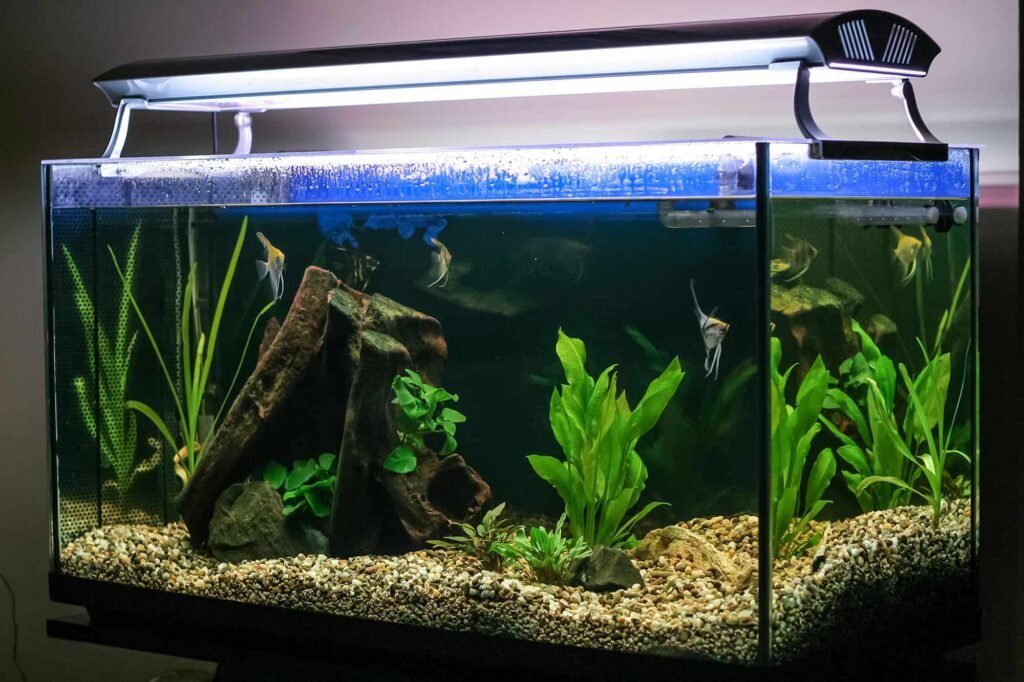
The most important thing to understand is that your aquarium functions as an ecosystem.
The water itself is only one part of that system.
Inside the tank, beneficial bacteria live on almost every surface.
They are present in the filter media, gravel, substrate, decorations, plants, and even on the glass walls.
These bacteria are essential because they process fish waste.
Every fish produces ammonia through waste and respiration.
Ammonia is highly toxic.
Even small amounts can quickly become dangerous.
Beneficial bacteria convert ammonia into nitrite, which is also harmful, and then into nitrate, which is much less dangerous and can be controlled with regular partial water changes.
This process is known as the nitrogen cycle.
Without this cycle, toxins build up rapidly.
When you replace all the water and clean everything aggressively, you risk disrupting this balance.
Even if you do not completely remove the bacteria, the sudden environmental shift can weaken the biological stability of the tank.
This is why the issue is bigger than “dirty water.”
What matters most is maintaining biological consistency.
Fish do not only react to visible cleanliness.
They react to chemical stability.
The Bigger Shift
This is where many aquarium owners need a change in perspective.
Clear water does not automatically mean healthy water.
Likewise, slightly cloudy water does not automatically mean danger.
The health of a tank is determined by stable parameters, not just appearance.
A tank with perfectly clear water can still contain dangerous ammonia spikes.
On the other hand, a well-cycled tank with a slight natural tint may be perfectly safe.
The real danger of a full water change is the sudden shift in environmental conditions.
Fish are extremely sensitive to changes in:
- temperature
- pH
- hardness
- chlorine levels
- mineral balance
Even if the new water is technically clean, these sudden differences can shock the fish.
Stress weakens their immune system.
This makes them more vulnerable to parasites, fungal infections, and bacterial diseases.
What looks like a cleaning solution may actually create a stress event.
This is why stability is always more important than perfection.
A slightly imperfect but stable tank is almost always safer than a perfectly clean but constantly changing environment.
Step-by-Step Adjustment
Step 1: Replace only part of the water
Instead of changing 100% of the water, aim for a partial change of around 20% to 30%.
For tanks with heavier bioloads, up to 40% may be acceptable.
This removes accumulated nitrates and waste while preserving the overall stability of the ecosystem.
The fish remain in familiar water conditions.
The bacteria colony remains active.
The system continues functioning normally.
This small adjustment is enough to improve water quality without causing shock.
Step 2: Protect your beneficial bacteria
One of the biggest mistakes is washing filter sponges or media under tap water.
Tap water often contains chlorine or chloramine.
These chemicals can kill beneficial bacteria almost instantly.
Instead, remove some water from the tank during the water change and use that old tank water to gently rinse the filter media.
This keeps the bacteria colony alive while removing excess debris.
Never replace all filter media at once unless absolutely necessary.
Doing so can destabilize the cycle.
Step 3: Match temperature and chemistry
Before adding new water, make sure the temperature is as close as possible to the tank’s current temperature.
A sudden temperature drop or increase can shock the fish.
The same applies to pH and hardness.
If the source water is very different, use conditioners or prepare the water in advance.
Always treat tap water with a proper dechlorinator before adding it to the tank.
Even a small amount of untreated chlorine can be harmful.
Step 4: Follow a consistent schedule
Consistency is what keeps tanks healthy long-term.
A regular weekly schedule is far more effective than waiting until the tank looks dirty.
For most aquariums, a weekly 20% to 30% water change works extremely well.
This prevents waste accumulation before it becomes a problem.
Routine maintenance reduces stress for both the fish and the owner.
The Perspective Change
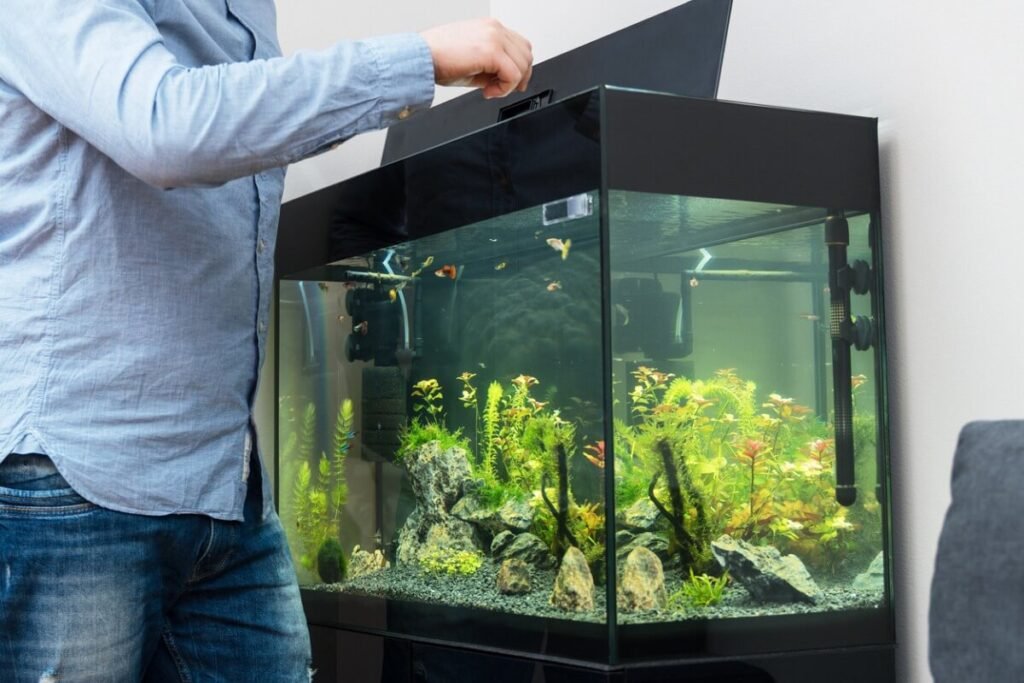
The real goal of aquarium care is not to make the tank look brand new every time.
The goal is to maintain equilibrium.
Fish thrive in predictable environments.
They adapt to stable conditions.
When the environment changes too drastically, their bodies must constantly adjust.
This repeated stress creates long-term health problems.
Once you stop thinking in terms of “clean versus dirty” and start thinking in terms of “stable versus unstable,” your entire approach changes.
That is when tank maintenance starts to become simpler.
And far more effective.
Conclusion
Changing all the water in your tank may seem like the fastest way to fix a problem.
But in many cases, it creates a larger one.
The aquarium is a living ecosystem built on balance, beneficial bacteria, and consistency.
Full water changes can disrupt that balance and place unnecessary stress on your fish.
Small, regular, controlled water changes are almost always the safer and smarter approach.
In aquarium care, stability protects life.
And sometimes the healthiest tank is not the one that looks the cleanest.
It is the one that changes the least.

David Bencivenga
Writer, advertising copywriter and SEO analyst, I am originally from New York and have been passionate about reading and writing since I was little. Books have always been my companions and favorite pastime, which led me to my profession. I hope you enjoy each of my texts and that they can help you in some way. Happy reading!